

Anybody that works in PR will be familiar with the phrase “all publicity is good publicity” and perhaps even those who don’t. In fact, oftentimes it’s those who aren’t in the communications industry that tend to agree with this sentiment, thinking it’s better to have a business in the public eye – no matter the reason – than not at all.
The truth is, there are so many times when this statement is absolutely true. There are plenty of tales of brands being able to turn negativity on its head (think the Colin v Cuthbert debacle) and even times where being ‘put on blast’ has also resulted in sympathies, support, and sales for a brand.
Coincidentally, an excellent example of this occurred just this week.
Why Going Viral Is Nearly Always A Good Thing
ASDA has stocked a ‘value’ range on its shelves for years now, as have other supermarkets. Recently, the products underwent a rebrand and can now be identified by bright yellow packaging and a very striking typeface. I know this happened around a month or so ago as I’ve had many a carton of apple juice in my fridge bearing this branding since it changed! 😆
However, it’s only this week that ASDA has been making headlines, and perhaps not for any reason it intended. It was really a post by LadBible that I saw get the most attention; it said that shoppers were complaining that the redesign is ‘embarrassing poorer families’. Many commenters on Facebook agreed.
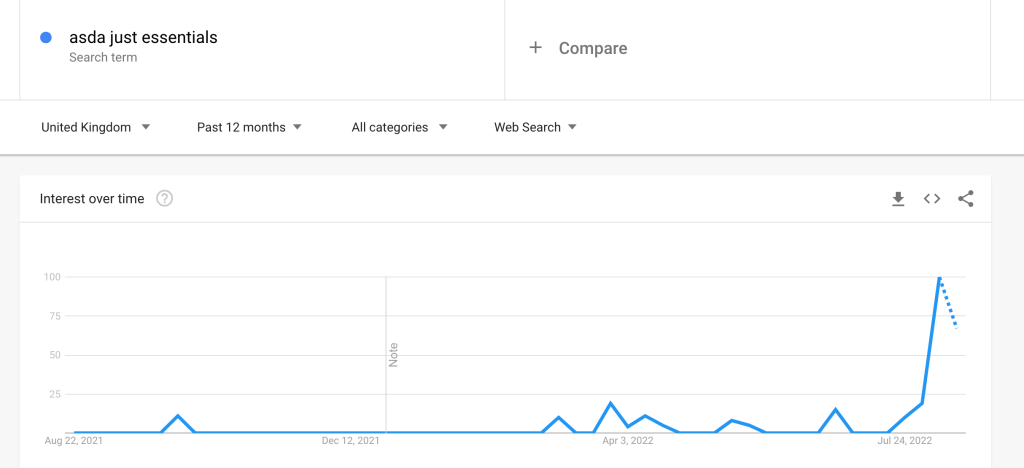
Since this post, there’ve been plenty of other articles written that bang the same drum, and lots more angry commenters and tweeters too. But something else has happened. With more conversation taking place about the packaging of the products, awareness and intrigue has increased too. Now, I’m seeing more shoppers rave about the range than complain about it – mainly talking about great the value is.
ASDA aren’t alone in offering and even expanding, its budget range amidst the cost of living crisis. But (as far as I know) it’s the only supermarket that’s recently redesigned it. Though the initial sting of criticism certainly wasn’t good for the brand, the aftermath has really helped to elevate the publicity of the products and has caused plenty of positive reactions. ASDA is continuing to promote the range well on social media too, and because of the now instantly recognisable packaging, engagement is through the roof!
So, in this case, what might have initially been a crisis for the brand, instead did a 180 and ended up really putting ASDA’s value range on the map. This has got to be a golden example for all those who’d argue there’s no such thing as bad publicity.
But… I’d still say there is.
Exceptional Situations Should Be Considered In Sweeping Statements
A lot of people that work in PR will argue that all publicity being good publicity is a huge misconception. They’re on to something!
From erstwhile examples such as the iconic case of Jerry Ratner causing the demise of his business by saying his products were ‘total crap’ on TV (yes that really happened!) to more recent debacles such as Colin v Cuthbert, where I actually think that despite Aldi’s triumph, M&S came out a lot worse off image-wise than if the legal case had never been brought about at all. Not to mention Marks & Spencers is now being repeatedly berated by its legal rival which continues to do it no favours as Aldi instead scoops up the affection.
Though I don’t deny that having your brand visible in the public domain is almost always a good thing (I am a PR after all) and going viral is, 9 times out of 10, the dream for any business we work with, I do think there are too many instances to argue that, without question, there’s no such thing as bad publicity. To name a few…
- Some things are unforgivable – Sometimes, brands can get rebuked for fairly surface-level things, but think about major mishaps, e.g., the allergen death caused by Pret-A-Manger. That got an incredible amount of ‘publicity’, for all the wrong reasons. Now, when people think of Natasha’s Law, they’ll think of that brand – there’s no way anyone can convince me that’s a good thing.
- Fame doesn’t often last long – I’d also argue that a lot of so-called ‘publicity’ is superficial. So yes, your brand may be in the news for one reason or another, it may even go viral, but admittedly weirdly as a PR, I do love that Notting Hill quote “today’s newspapers will be lining tomorrow’s wastepaper bin”. How many of these new ‘fans’ are actually going to stick around, engage with your brand, or buy your products or services? I’ve never heard of anyone selling out after going viral for the wrong This quote is also why I believe in a sustained approach when it comes to PR, instead of looking at quick wins and vanity metrics!
- Not everyone is quick to forget – And finally, if all publicity is good publicity, there would be no such thing as crisis communications (incidentally something we at Source are pretty prolific at). No good business would trade in its reputation and trust of stakeholders for 5 minutes of fame. PR is all about strengthening image, and being in the press for the wrong reasons can cause irreparable damage to your brand. As much as we love the idea of going viral, we never like to see our hard work unwinding! Not all debacles cause the decimation of a brand (M&S is still going strong, to give you an example) but in more serious cases, the cost of losing trusting customers can be detrimental.
There’s never a right answer to open questions, but now you know what I think!
I wrote this article for Source PR, where it first appeared.


2 thoughts on “Why I’m Saying All Publicity Is NOT Good Publicity”